


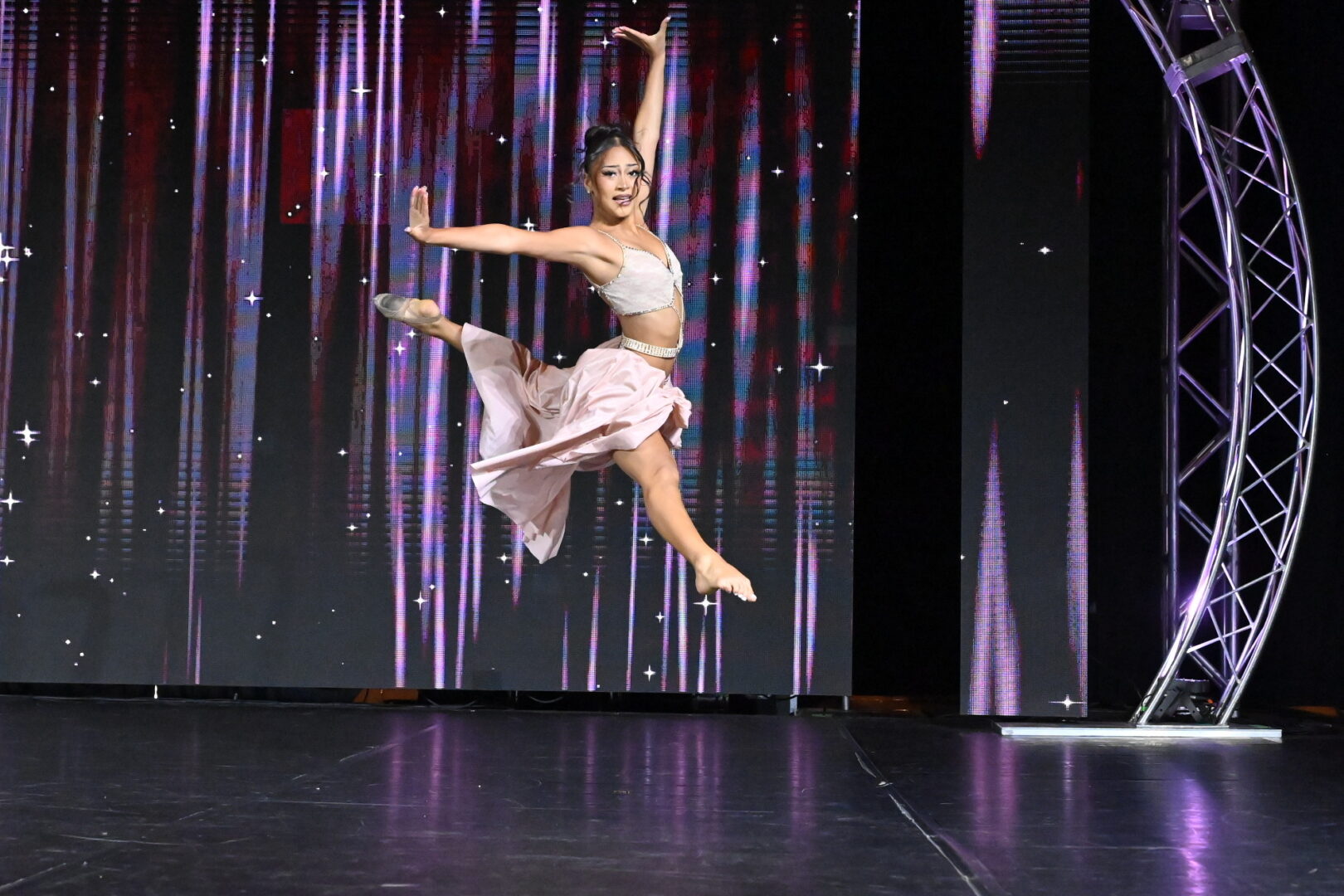
If there’s one dance skill that looks absolutely amazing when you finally get it, it’s a switch leap! The quick leg change, the height, the split in the air—it all comes together to create such a cool moment in your choreography. But it is a skill that can take a lot of time and patience to master. Switch leaps take a combination of timing, strength, flexibility, and coordination.
Master the Switch Before Adding Height
One of the trickiest parts of a switch leap is getting the legs to exchange quickly in the air. If you spend too long lifting your first leg, you might not have enough time to get into that second split position. Start by practicing the leg-switching motion at a lower intensity with your dance teacher. Focus on moving the first leg back as the opposite leg drives forward, rather than treating the movement like two separate kicks. Once the timing feels more natural, you can slowly work on adding more power and height.
Think Up Before You Think Split
It’s easy to get so focused on making your legs reach a bigger split that you forget about the actual jump. But height gives you more time to complete the switch and show your final position. Use a controlled preparation and push strongly through your supporting leg. Think about lifting your body upward instead of throwing your chest forward to reach for the floor. Keep your torso tall and let your arms work with your takeoff rather than swinging randomly.
Build Flexibility AND Strength
Flexibility can help you create a beautiful split position, but it isn’t the only part that matters. You also need the strength to lift and control your legs while you’re in the air. Include your regular dance-class flexibility work, along with teacher-approved exercises that strengthen your hips, core, and legs. Warm up before stretching, and work within a comfortable range instead of forcing your splits or pushing through pain. Also, remember that your flexibility on the floor and your flexibility in the air are not exactly the same. A switch leap requires active strength to move your legs into position, so keep working on both!
Make Your Landing Part of the Skill
A beautiful leap doesn’t end the second you get high off the ground! Your landing is part of what makes the whole skill look finished. Practice maintaining your posture as you come down, and allow your ankle, knee, and hip to bend naturally to absorb the impact. Aim for a controlled landing that lets you continue into your next movement without scrambling to regain your balance. If you’re losing control when you land, work with your teacher on smaller progressions before adding more height or speed. Clean technique will always be more valuable than forcing a bigger jump.
Keep working on the switch, trust the process, and celebrate every little improvement. Your future switch leap will thank you!