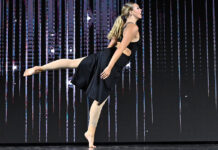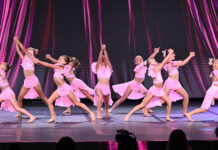



There is something so satisfying about watching a dance duo where both dancers seem to move as one. Every arm hits at the same time, every transition looks effortless, and even the tiniest details match. Mesmerizing!
Getting to that point takes plenty of hard work. You and your partner need good communication and chemistry. We’ve been taking notes, so if you want your next duo to make the audience (and judges!) say, “How did they do that?” read on for our synchronization strategies!
Learn the Choreography Separately First
Before trying to perfect your timing together, make sure you and your partner know the choreography individually. Practice your steps, counts, transitions, and musical cues on your own. If one dancer is still thinking about what comes next while the other is already performing it, it becomes much harder to look synchronized. Become so comfortable with the choreography you could do it to just counts or just the music.
Practice With Counts
Music can sometimes make timing differences harder to notice, so start with counts. Go through the choreography slowly and count out loud together. Pay attention to exactly when each movement begins and ends. If you both understand the timing in the same way, your movements will naturally start lining up. Once the counts feel consistent, add the music back in. This will make your dance stay in sync and flow at the same time.
Pick a “Leader” for Tricky Sections
This doesn’t mean one dancer is more important or better than the other! It can just be helpful to have one person to break things down. For sections that involve traveling, turns, or complicated timing, decide ahead of time who you’ll use as your visual cue. Having one person to watch can help you both stay together instead of each dancer guessing when to move; that way you’ll always know where to look and what to do.
Practice Transitions
Transitions are one of the easiest places for a duo to fall out of sync. Don’t only practice the “big” moments of your choreography. Drill the moments between them, too. Ask yourselves: Are we stepping at the same time? Are we changing levels together? Are we arriving in the next position at the same exact time? These moments are just as important as your big wows and tricks.
Match Your Energy
Synchronization isn’t only physical. If one dancer is performing at a huge energy level while the other is more relaxed, the duo can look disconnected even if every step is technically correct. That is why matching each other’s energy as well as the energy of the music is so important. Matching the energy of the movement can make your performance look much more unified.
And remember: you don’t have to be perfect to look connected. When you trust your partner, listen to each other, and perform as a team, your chemistry will shine through—and that’s what makes a duo so special.